- 11.08.2026
- News
Nicotine vending machines: a structural failure in age verification
Protecting minors is one of the primary objectives of the Federal Act on Tobacco Products and Electronic Cigarettes (LPTab). Yet, sales via vending machines continue to pose a major challenge to achieving this goal. Although the LPTab requires operators to prevent sales to anyone under the age of 18, several recent incidents demonstrate that age- verification systems remain easily circumvented or can be rendered ineffective by simple technical errors. Indeed, test purchases conducted in several cantons confirm that these machines show significantly higher rates of sales to minors than those observed in retail outlets with staff. These findings raise a more fundamental question: can a vending machine truly guarantee effective protection for minors, or are there inherent limitations in this distribution method?
Several recent incidents across various cantons illustrate the flaws in this system.
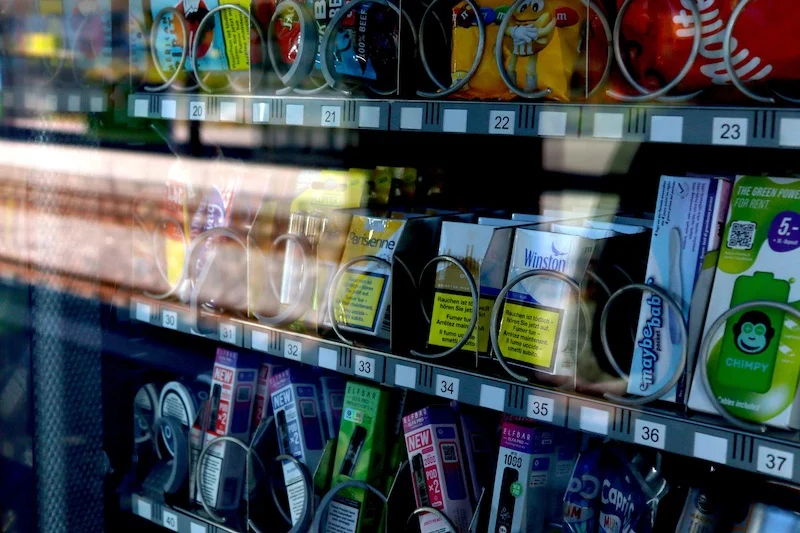
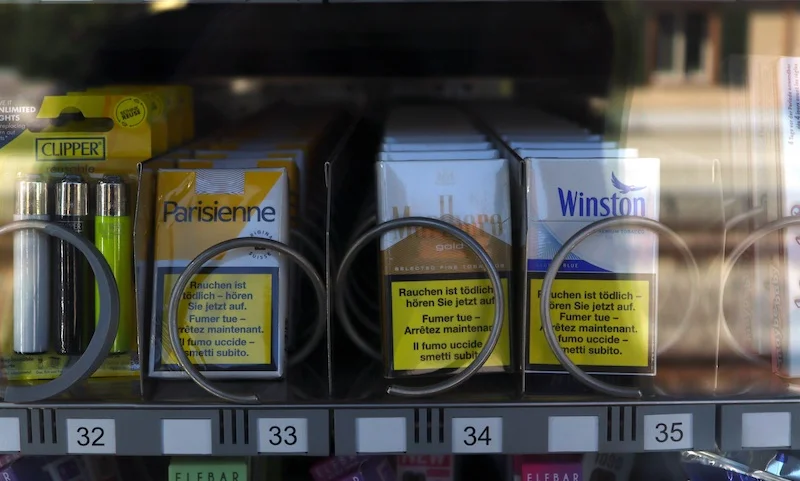
Wabern: a Selecta vending machine with no age verification
In Wabern (Bern), a vending machine installed at the train station offered cigarettes, e-cigarettes, nicotine pouches, and other nicotine-containing products without any age verification mechanism activated, in violation of the requirements of the LPTab.
The anomaly was discovered by local residents who found that the products could be freely purchased — a fact subsequently reported by several media outlets.i Following this media coverage, the operator, Selecta, acknowledged that a configuration error during the machine's installation had disabled the age-verification system; Selecta then proceeded to reactivate the system.
To date, no public information indicates whether this violation of the law has resulted in administrative proceedings or a sanction. However, to guarantee the effective application of the LPTab and reinforce its deterrent effect, such infractions should be met with sanctions that are swift, systematic, and sufficiently severe to compel operators to exercise rigourous control over their equipment.
Beyond this isolated technical failure, the incident highlights an inherent weakness in the Swiss model: compliance with the law depends not only on the existence of an age-verification system but also on its proper installation, configuration, and maintenance, as well as on regular checks by the operator. A simple technical or human error can thus render inoperative a measure crucial for the protection of minors, without the authorities immediately detecting it.
The Wabern incident takes on broader significance in light of the strategy announced by Selecta in June 2026. After having removed tobacco products from their public network for over a decade, the company has confirmed their gradual reintroduction into select vending machines in Switzerland — alongside beverages, snacks, e-cigarettes, nicotine pouches, and even lighters. Selecta maintains that this new offering relies on an age-verification system that operates before product selection begins, ensuring that no purchase can be made if the check fails.ii However, these claims rely exclusively on statements made by the company and are not supported by any independent assessment of the equipment's reliability. The recent Wabern incident calls for our caution; it demonstrates that a system can in theory be technically high-performing while remaining vulnerable to errors in installation, configuration, or maintenance. Reintroducing these products into general-purpose vending machines also raises the issue of normalisation: placed alongside beverages and confectionery, tobacco and nicotine products are presented as ordinary consumer goods and benefit from constant visibility, including to minors. This commercial strategy thus illustrates the limitations of a model that relies primarily on a technical solution to protect young people, rather than on tighter restrictions on vending machines.
Ticino: a simple photograph allows minors to bypass age checks
In February 2026, the Malcantone West Inter-communal Police reported a serious problem to the Swiss Association for Tobacco Control regarding tobacco product vending machines installed in the Canton of Ticino. The report followed several incidents involving young students of around 12 years of age who had managed to buy cigarettes from a vending machine at the Lugano–Ponte Tresa railway station in Ponte Tresa.
According to police findings, the minors could easily bypass the age-verification system: all it took was holding a simple photograph from the back of an adult's ID card up to the vending machine's scanner — images that the children freely exchanged via messaging apps.
Following this report, the police carried out several on-site checks. Officers discovered that the same system was being used on other vending machines in the area and managed to replicate the violoation using the photograph from their own ID. They thus demonstrated that the vending machine unlocked without any accurate verification of the identity of the person standing in front of the machine. The inspections also revealed that all the vending machines, installed outside shops, were accessible 24 hours a day and lacked any staff surveillance. In addition to cigarettes, some also offered electronic cigarettes, hemp-derived products, and, in one case, alcoholic beverages.
The police subsequently forwarded their report to the competent authorities, the Cantonal Laboratory, the Federal Office of Public Health, and the Swiss Association for Tobacco Control. The report pointed out that this vulnerability likely affected not only the Ponte Tresa vending machines, but could reveal a problem potentially affecting numerous machines nationwide. This case demonstrates that an age-verification system relying solely on reading an identity document, without accurately verifying the buyer's identity, can easily be circumvented and fails to guarantee compliance with the ban on selling tobacco products to minors.
Basel: a vending machine without even a permit
On 14 July 2026, the Basler Zeitung (newspaper) revealed that an e-cigarette vending machine installed in Gerbergässlein, in the heart of Basel's Old Town, had been set up without the required permits.iii Heritage protection authorities intervened and required the operator, Sibannac GmbH, to either remove the installation or regularise its status through the building permit process. This case highlights that vending machines raise issues not only regarding youth protection and age verification but also concerning the use of public space, compliance with urban planning regulations, and the integration of these units into protected historic sites. It shows that some operators are prepared to install such systems without waiting for all the required authorisations, raising questions about compliance with applicable regulatory obligations.
Finally, this case illustrates a worrying trend: some operators appear to prioritise a fait accompli approach, profiting from installing vending machines before obtaining the necessary authorisations and then leaving it to the authorities to intervene and enforce regulations.
Test purchases confirm structural weaknesses in vending machines
Beyond these examples, available data show that these are not isolated cases. Test purchases carried out in Switzerland confirm that vending machines have structural weaknesses regarding age verification.
Test purchases conducted in 2023 in the canton of Vaud by Unisanté, the Vaud Foundation against Alcoholism, and the Cantonal Commerce Police clearly highlight the weaknesses in age verification in cigarette vending machines. Of the 393 points of sale inspected, 103 test purchases — representing 26.2% of the total — were made at a vending machine. In this context, the age of young people was only checked in 57.3% of cases, compared to 72.4% when the purchase was made directly from sales staff. Notably, 46.6% of attempts made at a vending machine resulted in the sale of a tobacco product to a minor — nearly one in two — compared to 24.1% for purchases made directly from a salesperson. Vending machines played a particularly significant role in restaurants, bars, cafés, and hotels, where nearly four out of five test purchases were made using this method and where the overall rate of sales to minors reached 44.8%. These results show that the presence of an age-verification mechanism — whether a token issued by staff or an ID scanner — does not in itself guarantee compliance with the sales ban. The effectiveness of the system also depends on how it is installed, used, and monitored, as well as on the vigilance of the personnel responsible for overseeing access to the automated system.iv
LPTab and vending machines: a structural incompatibility?
The examples presented so far show that the difficulties encountered do not stem solely from technical failures or isolated errors. They raise a more fundamental question: do vending machines constitute a sales outlet compatible with LPTab’s objective of protecting minors? Unlike a traditional retail outlet, a vending machine doesn’t allow for in-person age verification when a buyer's identity is in doubt. Electronic verification systems can be disabled, misconfigured, or insufficiently secure, while their proper functioning can only be verified through regular checks. Furthermore, several examples observed in Switzerland and Germany show that these vending machines are sometimes installed in places frequented by young people — or even near schools — and that they offer nicotine products alongside beverages or snacks.v This presentation trivialises nicotine products by equating them with everyday consumer goods and increases their visibility among adolescents. These situations illustrate the limitations of a system relying primarily on technical age-verification measures rather than on restricting the vending machine itself.
The legal situation in Switzerland
In Switzerland, selling tobacco products, electronic cigarettes, and other nicotine-containing products via vending machines is still permitted. However, since the LPTab entered into force on 1 October 2024, selling these products to persons under the age of 18 has been prohibited throughout the country. Vending machine operators are required to implement appropriate measures to ensure compliance with this prohibition. Federal legislation thus establishes an obligation to achieve a specific result — preventing access by minors — but prescribes neither a specific age-verification technology nor uniform technical requirements applicable to all vending machines. In practice, operators may use various control measures, provided they are deemed capable of preventing sales to minors. Furthermore, the application of the LPTab falls within the purview of cantonal authorities, who are able not only to monitor compliance with these obligations but also to adopt provisions more restrictive than federal law.
Difficulties in implementing the law
The main challenges lie in the effective implementation of these regulations. In the absence of a uniform age-verification system mandated by federal legislation, operators may use technologies with varying levels of reliability. Depending on the systems used, verification relies on a bank card, an electronic ID card, a token issued by staff following a check, or remote unlocking. However, these systems do not always make it possible to verify that the person using the machine is indeed the same person whose age was checked. A bank card or a token may be lent to a minor, while remote verification does not consistently guarantee reliable identification of the purchaser. Furthermore, vending machines provide access to products without direct interaction with a salesperson, thereby eliminating the possibility of human verification should there be any doubt regarding the buyer's age. Finally, the implementation of the law is the responsibility of cantonal authorities, which can lead to differences in the intensity of inspections, the frequency of test purchases, the assessment of age-verification systems, and the application of sanctions. This heterogeneity raises questions regarding the actual effectiveness of the Swiss system in preventing minors from accessing tobacco and nicotine products.
The situation in the cantons
Comparative analysis illustrates Switzerland’s lack of a uniform policy. While Appenzell Outer Rhodes completely bans tobacco vending machines, the majority of cantons merely impose "appropriate measures" without defining minimum technical standards. This approach leaves considerable leeway to both operators and enforcement authorities, leading to widely varying levels of protection across the cantons.
This lack of uniform criteria constitutes a significant weakness in the current system. Cantonal legislation rarely specifies the characteristics that age-verification systems should possess, such as real-time authentication, biometric verification, or confirmation of the buyer's identity. In practice, operators are free to choose which technical solutions they implement, while the cantonal authorities have considerable latitude in assessing their compliance to the law.
This situation is particularly concerning in light of observations made in the field. A case documented by the Malcantone West Inter-communal Police demonstrated that a control system deemed compliant could be very easily bypassed using a simple photograph of the back of an adult's ID card, thereby allowing minors to access tobacco products. This case illustrates that formal compliance with legal requirements does not necessarily guarantee effective protection for minors.
In this context, the patchwork of cantonal regulations and the lack of harmonised technical standards raise questions regarding the effectiveness of the current system. However, given the shortcomings of the LPTab — which once again make it difficult to implement truly effective protection for minors across Switzerland — the cantons have significant scope for action. Like Appenzell Outer Rhodes, they could completely ban the sale of tobacco and nicotine products via vending machines.
Nicotine, drinks, and candy: how to normalise addiction
Beyond the challenges of age verification, vending machines also raise significant public health concerns. Unlike a traditional retail outlet, where purchasing a tobacco or nicotine product involves interacting with a salesperson who might ask for an ID, refuse the sale, or act as a deterrent — vending machines offer impersonal, rapid, and round-the-clock access. Their presence in high-traffic public areas — often near shops, train stations, or other places frequented by young people — further contributes to normalising nicotine-containing products by presenting them as ordinary consumer goods, much like beverages or snacks. Vending machines are not merely a sales outlet; they also serve as a permanent advertising medium that boosts the visibility of nicotine products.
This constant visibility enhances their appeal to adolescents, encourages impulse buying, and contributes to normalising nicotine use in the public space. Extensive public health research shows that the availability and accessibility of tobacco products directly influence consumption — particularly among young people, for whom easy access is a recognised factor in initiation. A systematic review with meta-analysis published in 2024, covering 62 studies, concludes that a higher density of retail outlets is associated with a 23% increase in the likelihood of current smoking among young people and recommends that reducing this availability be an integral part of prevention policies.vi From this perspective as well, vending machines appear difficult to reconcile with LPTab’s objective of protecting minors.
The situation in Europe: an increasing number of countries are banning vending machines.
Switzerland is not the only country facing this problem. However, a comparison across Europe reveals a clear trend towards stricter regulation — or even the elimination of this sales outlet.
The situation across Europe varies significantly. In several large countries, such as France, the United Kingdom, Greece, and Turkey — as well as in most Balkan, Baltic, and Nordic nations (with the exception of Sweden) — the sale of tobacco or nicotine-containing products via vending machines is prohibited. Conversely, in other countries — notably Germany, Italy, and Poland — such sales are permitted, generally subject to strict age-verification systems.vii
The trend is clearly towards the gradual disappearance of vending machines. The countries that still retain them (notably Germany, Austria, Italy, and Spain) have all introduced sophisticated age-verification systems to restrict access by minors.
Switzerland currently stands out as one of the few Western European countries that continues to view vending machines as an acceptable sales outlet, even as the prevailing European trend clearly favours their elimination or increasingly strict regulation.
Conclusion
The various examples presented in this article — in Wabern, Ticino, and Basel, along with the results of test purchases conducted in the Canton of Vaud, and the analysis of the Swiss legal framework — all lead to the same conclusion: vending machines have structural weaknesses that cannot be fully offset by technical age-verification systems. Unlike staffed retail outlets, they do not allow for human verification of the buyer's identity and remain vulnerable to configuration errors, technical failures, and circumvention.
They also contribute to normalising nicotine-containing products by giving them constant visibility in public spaces, often near locations frequented by young people. In this context, effectively protecting minors requires not only stricter controls and penalties but also consideration of the gradual elimination of this distribution outlet. Trends observed in many European countries today show that such a measure is not only feasible, it is becoming the norm.
Based on available data, banning tobacco and nicotine product vending machines would not only align with public health trends in much of Europe, it appears to be the most effective measure to ensure uniform protection of minors across Switzerland.
Given the shortcomings of the LPTab and the difficulties encountered thus far in strengthening federal legislation, despite the wealth of available scientific data, the cantons once again appear best positioned to advance the protection of young people. Following the example of Appenzell Outer Rhodes, they could implement total bans on tobacco and nicotine product vending machines to ensure more effective and consistent protection for minors.
Luciano Ruggia, le 11 août 2026
[i] Gnos, Fabienne (2026) «Bin schockiert»: Automat ohne Alterscheck führt Vapes und Zigis. Am Bahnhof Wabern bei Bern verkauft ein Selecta-Automat Zigaretten, Vapes und Snus ohne Alterskontrolle. Selecta hat nach dem 20-Minuten-Selbstversuch eine technische Überprüfung angekündigt. In : 20 Minuten, 4 juillet 2026. En ligne : https://www.20min.ch/story/wabern-bei-bern-bin-schockiert-automat-ohne-alterscheck-fuehrt-vapes-und-zigis-103595819.
[ii] Hillig, Johannes; Rosser, Angela (2026) Verkauft Selecta wieder Zigaretten? Das Internet rätselt gerade über ein Video, das zeigen soll, wie Zigaretten und Tabak neben Snacks und Getränken im Automaten stehen. Das ist tatsächlich wahr und absolut legal. In : Blick, 26 juin 2026. En ligne : https://www.blick.ch/schweiz/raetsel-um-instagram-clip-verkauft-selecta-wieder-zigaretten-id22063025.html.
[iii] Schanzer, Sebastian (2026) «Wilder» E-Zigaretten-Automat im Gerbergässlein. Ein Automat ohne Bewilligung in der Innenstadt? Die Denkmalpflege schreitet ein. In : Basler Zeitung, 14 juillet 2026.
[iv] Notari, Luca; Naula, Malika (2024) Achats-tests tabac et alcool dans le canton de Vaud. Résultats des achats-tests tabac 2023 et 2024. Addiction Suisse. Lausanne.
[v] Gaitzsch, Anneke (2026) Vapes und Energy-Drinks vor der Schultür: Itzehoes Schulen schlagen Alarm. In : SHZ, 3 juillet 2026. En ligne : https://www.shz.de/lokales/itzehoe/artikel/vapes-und-snacks-im-automaten-itzehoer-lehrer-schlagen-alarm-50853983.
[vi] Martin-Gall, Veronica; Neil, Amanda; Macintyre, Kate; Rehman, Sabah; Nguyen, Thuy Phuong; Harding, Ben; Gall, Seana (2024) Tobacco retail availability and smoking-A systematic review and meta-analysis. In : Drug and Alcohol Review, vol. 43, n° 7, p. 1718–1732. DOI: 10.1111/dar.13936.
[vii] https://extranet.who.int/fctcapps/fctcapps/fctc/implementation-database/indicators/sale-tobacco-products-vending-machines-prohibited (consulté le 14.07.2026)