Smoking cessation
- Nearly two thirds – 60.5% – of people who smoke would like to stop smoking.
- The desire to stop smoking can vary considerably according to sociodemographic or economic characteristics, for example between language regions and by nationality.
- Over the course of one year, one in seven people who attempt to stop smoking succeeds.
- Only around two in ten former daily smokers – 19.1% – manage to stop on their first attempt.
Smoking cessation is evidently another key factor shaping trends in tobacco use, both from an epidemiological perspective – for example, a reduction in smoking prevalence if smoking initiation does not outnumber cessation – and at the level of individual behaviour, through the short-, medium- and long-term reduction in health risks. See also our webpage on the benefits of smoking cessation.
Desire to stop smoking
In the 2017 Swiss health survey (ESS - Enquête suisse sur la santé), 62.0% of smokers reported wanting to stop smoking (Figure A4A-1; OBSAN, 2021[1]). More than a quarter of smokers – 28% – reported having made a serious attempt in the preceding 12 months (with a relapse at least two weeks later; OFS, 2020[2]). These same data reveal that over the course of a year, one person out of six who attempted to stop smoking appears to have succeeded. Out of the population as a whole, it is estimated that almost half of the people who smoked at one time were able to stop (44%; the proportion of former smokers out of all those who reported having smoked).
In 2022, the proportion of smokers expressing a desire to stop nevertheless varied considerably between language regions (smokers in French-speaking and Italian-speaking Switzerland > smokers in German-speaking Switzerland), by nationality (other nationalities > Swiss nationals) and by employment status (unemployed people > employed people and economically inactive people).
Smokers’ willingness to stop smoking does not appear to have changed greatly since the early 2000s (OBSAN, 2026[1]).
Data on motivation to stop tobacco use are also collected as part of the Health and Lifestyle omnibus survey [3]. In 2025, more than half of cigarette users (52.6%), heated tobacco products (50.6%), snus (59.9%) and nicotine pouches (57.4%) said they wanted to stop using these products (Notari et al., 2026[4]).
Daily smokers’ readiness to stop smoking
The Swiss Addiction Monitoring system, which was active until 2016, documented the issue of quitting in detail in reports dedicated to this topic (latest data collected in 2015; Kuendig et al., 2016[5]). These data showed that six in ten daily smokers – 60.1% – said they wanted to stop smoking. More than one third of occasional smokers – 37.2% – said the same.
Using a typology that classifies smokers according to their readiness to stop smoking (Prochaska et al., 1992[6]), it was estimated that while 36.8% of daily smokers were in the so-called precontemplation stage (no expressed wish to stop), no fewer than 19.9% were in the contemplation stage (planning a quit attempt within 1 to 6 months) and 11.9% were in the preparation stage (planning to stop within the next 30 days). The proportion of daily smokers in the preparation stage was slightly higher among those aged 25–34 (14.6%) and 35–44 (14.5%), and lower among those aged 20–24 (8.0%).
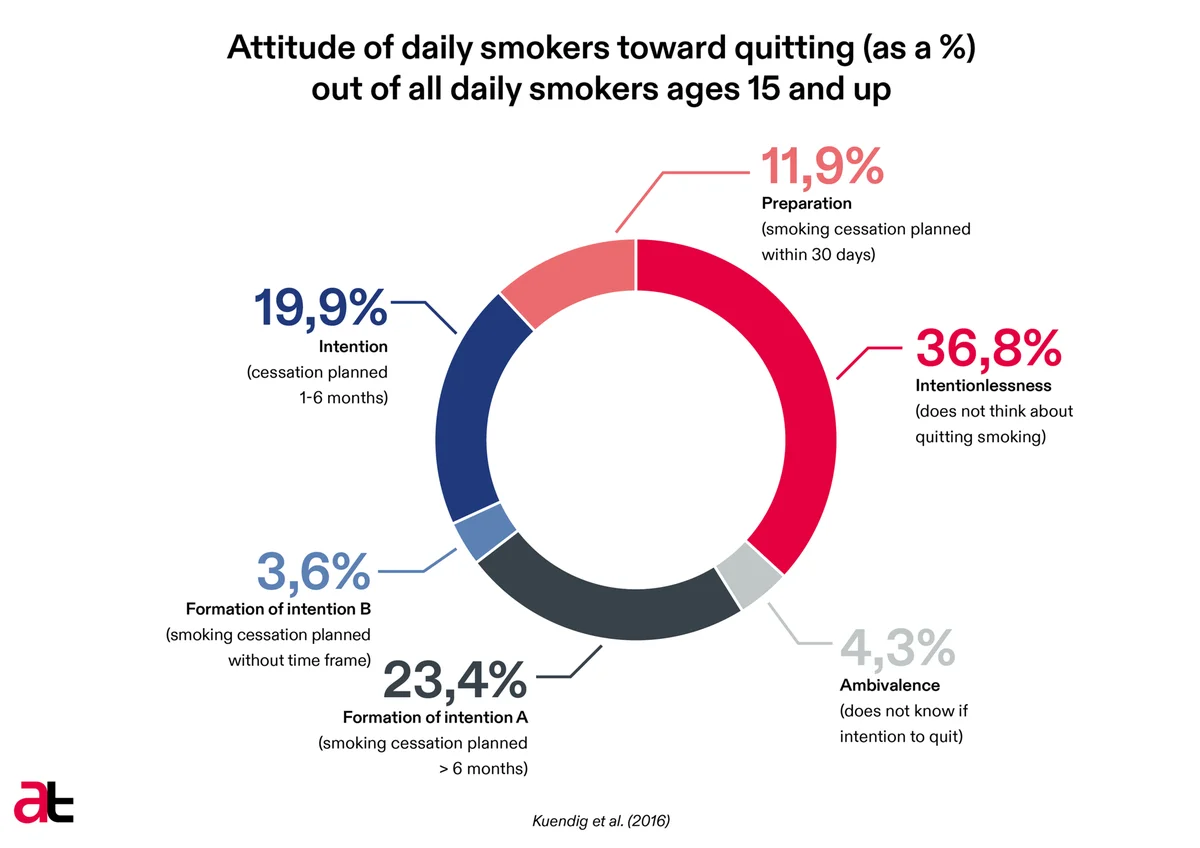
Figure 1 – Attitude of daily smokers toward quitting (as a %) out of all daily smokers ages 15 and up, CoRolAR 2015 (Source: Kuendig et al., 2016[8]).
Successful quit attempts
Regarding smoking cessation itself, and therefore successful quit attempts, the same report shows that eight in ten former daily smokers – 80.1% – had tried to stop smoking several times before succeeding (Kuendig et al., 2016[5]). In addition, the reasons most often given by former daily smokers for stopping were clearly health-related: 33.4% mentioned “to prevent diseases” and 16.1% cited “awareness of the health consequences of tobacco” (former occasional smokers most often reported both disease prevention and “loss of pleasure in smoking”). It should also be noted that, in this survey, more than three quarters – 76.3% – of former daily smokers said they had not used any cessation aid to stop smoking.
[1] https://ind.obsan.admin.ch/fr/indicator/monam/disposition-a-arrter-de-fumer-age-15; Accessed 30.04.2026.
[2] OFS (2024) : Actualité OFS - Enquête suisse sur la santé 2017 – La consommation de tabac de 1992 à 2022. OFS. Neuchâtel. Download.
[3] https://www.bag.admin.ch/fr/enquete-sante-et-lifestyle; Accessed 30.04.2026.
[4] Notari, L., Amos, J., & Delgrande Jordan, M. (2026). Produits du tabac et de la nicotine – Résultats de l’Enquête Santé et Lifestyle 2025 et évolutions récentes. Addiction Suisse. Download.
[5] Kuendig, Hervé ; Notari, Luca ; Gmel, Gerhard (2016) : Désaccoutumance tabagique en Suisse en 2015 - Analyse des données du Monitorage suisse des addictions. Addiction Suisse. Lausanne. Download.
[6] Prochaska, James O; DiClemente, Carlo C; Norcross, John C. In search of how people change. Applications to addictive behaviors. American Psychologist. 1992 47;9: 1102-1114.
AT Suisse, April 2026